Thursday, 28 August 2014

IPHONE ART ALL AROUND US - 3

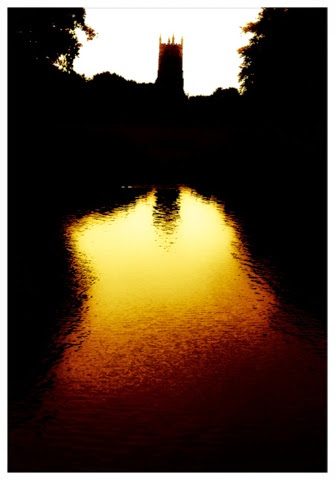
These photos are time exposures ...

Cheltenham Town Centre

Italian Restaurant

The Abbey Grounds

Woods along the Churn

Buddlia

Morning Café


Monday, 25 August 2014

IPHONE ART ALL AROUND US - 2


I used a time exposure app in full daylight in the Abbey Grounds, Cirencester, to see what would happen. This is what happened.
Cotswold Water Park Lake 6, from the café. I just boosted the colours a little.
I love the fact that iPhones make street photography very easy. This is the Adamant Jazz Band outside Brecon Cathedral, warming up for the morning jazz service, where it is traditional for them to lead the clergy in and out of the building.
The Cotswold Water Park is being formed from ongoing gravel extraction works in the upper Thames Valley. This creates some intriguing photographic opportunities. This is near Ashton Keynes.
Ross-on-Wye August 2014. It stands on a red sandstone bluff above the beautiful River Wye, on the Wales/England border. This border country is known as the Welsh Marches (pronounced 'marshes').
Another time exposure app experiment in the Abbey Grounds, Cirencester. I don't cut and paste in my pictures. They are all straight shots except for the colour balance. I play around with colour filters, that's all.
A Cirencester apple orchard near us. This scene just leapt out at me and said 'Take me!' So I did. It's a straight shot except for the fact that I lightened the shadow slightly.


Sunday, 24 August 2014

IPHONE ART ALL AROUND US


A selection of my favourite photographs ...
Gloucester Docks Silhouette, August 2014. I like the connection with sails and weather conditions here. I just under exposed the shot.
Gloucester Docks during filming of "Through The Looking Glass" August 2014. The tall ships always make the docks look olde worldly, especially with a touch of sepia filter.
New Brewery Arts Centre, Cirencester, 2013. The man and the pigeons are as it was, with postcard effect added using an app.
Smoke Bush, Abbey Grounds, Cirencester 2014. As with my other iPhone pictures this is a straight shot with just the colours brought out strongly by applying a filter.
Waiting for a bus, Ilfracombe 2014. I was in the bus station when I took this shot.
National Arboretum Memorial 2014. At the eleventh hour of the eleventh day of the eleventh month each year the sun is lined up with the slot in the wall and shines on the poppies. One hopes it is shining at that time. Very moving, even just thinking about it.
Clevedon Pier, 2014. At the end of the pier is a lovely little cafe selling tea, coffee and cake. I prefer that to fishing.
The Rosetta Stone, British Museum, London 2014. One of my 'selfies', using the reflective glass of the display cabinet.
Mill Stream, Cirencester 2014. A straight picture.
Abbey Grounds Fishing Lake, Cirencester 2014. All this took was to increase the contrast.
The Norman Arch, Cirencester 2013. A straight shot. I love the gateway being echoed by the doorway, both leading into the Abbey Grounds. 
Display Cart, The Organic Farm Shop, Wiggold, Cirencester 2013. This scene was just there for the taking, so why not?
Waiting for the Swindon Bus, Cirencester 2013. I just loved this chap's outfit. He had real style, but I didn't have the courage to ask him about it. It would have disturbed what, to me, was a gift of a scene.
The Vortex Water Feature, Alnwick Castle Gardens 2013. All this took was an increase in contrast. Otherwise the picture, again, is as it was, whirling water in a great steel dish. It is quite my favourite feature in the water garden, and takes about ten minutes to go through its sequence of emptying and refilling, so stick around for the whole show. So many people don't stay. Too impatient.
The North Sea at Alnmouth 2013. My personal caption to this is, "That's the North Sea, that is, Ethel. Starts here and goes all the way to Denmark." Feel free to make up your own.


Friday, 1 August 2014

Patrick Wise's Schooldays - Primary Days ~

The Migraine Years
It soon became clear to me, but no-one else, with the possible exception of my mother to some degree, that I suffered at school. It was not from bullying, which came later at Grammar School, but from what nowadays is known as migraine. Severe migraine. Migraine didn't exist in the forties. One had headaches and they were regarded as a woman's complaint. Men didn't have them, and neither did schoolboys. My experience was that I could not look at black print on white pages for more than ten minutes without getting a blinding sharp pain in my head.
And it didn't go away when I stopped reading. The trigger had been pressed and I would have to go through the whole ghastly process. This was raging head pain that lasted around twenty-four hours and made me feel sick. Sound and light became unbearable and I just wanted to bury my head under a pillow to shut out the world. If all this sounds a little extreme, believe me, this was how it was, and it stayed that way until after I was over forty years old.
It made school work very difficult. It made everything difficult. But I had to try to keep up with the pack, even though the going was tough. University was out of the question, although I did manage a one year course at what is now known as The Royal Agricultural University. It was a College when I went. 
My mother, God bless her, realised that something was wrong with me, but what could she do? Take me to the doctor? She did, many times. The answer was always the same. Take him home and give him an aspirin. Sometimes I was taken to the Radcliffe Infirmary in Oxford, where I was led into small hot rooms after long waits, asked to lie on a bed while rubber nets were stretched over my head! Electrodes were inserted under this unbecoming stretchy hairnet until I looked like Medusa, and I was asked to lay back and keep still. The medic would then sit across the room behind a screen, the lights would be turned down I'd be asked apparently randomly to close my eyes, open my eyes, take a deep breath, hold it, close my eyes, breathe out, open my left eye, close it, open my right eye, or so I remember. Eventually I'd be put back together and packed off back to the consulting room where I'd be looked at with some disdain.  
Take him home,they'd tell my mother, and give him an aspirin.
As anyone who suffers from migraine will know, this was entirely useless advice. Migraine didn't exist, so it was thought, hence the inappropriate advice.
Migraine continued not to exist until I my mid teens.
By then things were happening. People who mattered must have been reporting similar symptoms to me, I suspect. It was beginning to dawn on the medical profession that there was a problem out there in general public land. I expect work days were being lost and industry was complaining.
The Migraine Trust was founded in 1965.
I subscribed, and it marked a small turning point in my life. Reading letters from other sufferers in the Trust's newsletter was an eye opener. I was not alone. I was not a malingerer, a tag I had acquired in some circles. I really did have a medical condition. My mother, a former children's nurse, continued to fight for me. She even got me an appointment to see a migraine specialist in Harley Street. But this was still early days. I guess that there was much experimentation going on. I was given some pills and told to take them whenever a migraine attack occurred. I did. They made my kidneys ache and knocked me out for 24 hours. I stopped taking them.
I continued to have severe migraine attacks until I reached my mid forties, on average half of every week would be spent fighting them while trying to lead a normal life. To use a term, they were a drag. They affected every aspect of my life. Everything. It was difficult, to say the least. But by my mid-forties I was beginning to win the battle. The attacks were becoming milder and less frequent. Now I hardly ever get them. It's taken one heart attack and a life sentence of daily pill taking, but hey! I'm walking and talking. Life is good. 
I'm alive and happy. 

Thursday, 5 June 2014

The Cubicle

Today
I am the one
In the cubicle
Displaying 'Engaged'.
I shall remain silent if
I hear signs of life outside
I shall wait
Until all sounds of shuffling
Splashing water
And blow driers
Ceases
I shall wait
Until footsteps
Have died away
And I hear the outer door closing.
When all is quiet
I shall come out of the cubicle
And wash my hands
And blow dry them in the machine on the wall
I'll hope it's one of the newer fast ones
Preferably a DYSON Blade with violet light
Then I shall leave the premises
Being careful 
to use my coat sleeve
In order 
to avoid touching the door handle.
And  re-enter the world. 

Wednesday, 21 May 2014

Magic Moments in Norway

I've always loved the music of Edvard Grieg. It speaks to me, deeply. As the song goes, I don't know why, it just does. It makes a connection somewhere within me, maybe from another life. Who knows? There's a sad, beautiful melancholy in the music, something to do with the scale of A minor as I understand, but it's more than that. I hear it deep in my soul.
I first became of aware of Grieg's music over half a century ago, in my teens, back in the days when there was just one TV channel, broadcast by the BBC. Continuity announcers Sylvia Peters and MacDonald Hobley, attired very formally in evening dress, provided the programme links. And we had Intervals (bvws.org.uk); time to go off and make a cup of tea, ready for the next show. Sometimes the TV studio transmitter simply broke down and programmes disappeared, whereupon Sylvia or Peter would apologise and put on a record for us to listen to while the screen showed "Normal Service Will Be Resumed As Soon As Possible" and engineers scrambled to fix the fault. I am sure, though it's hard to verify, that they often used Grieg's "Last Spring', or 'Våren', during these pauses. The sad longing refrain softly sang to my soul and has remained with me ever since. It led me to the beauty,charm and humour of the rest of Grieg's music, making him my favourite composer by far.
So, a working life later, I find myself almost alone on the observation deck of a beautiful Norwegian Coastal Hurtigruten ship, slipping smoothly and quietly along the dark glass waters of the Geirangerfjord in Norway. My iPod is, of course, loaded with Grieg's music. Headphones on, I listen. I watch. Glistening waterfall cliffs glide smoothly by on the music of 'Solveig's Song' and 'Morning'. Impossible summer farms, straight from tall tröll tales, perch precariously on narrow green ledges high above the water, on the sheer black rock face walls. Gulls wheel and waltz over sunbeams flashing and dancing on rippling green wake. An interlude of magic.
Yet from these peaceful summer fjords came Vikings. They came to Britain, fought bloody battles then settled in peace. Their blood intermingled with British blood and remains there still, over a millennia later, in friendship. 
I am sure it strums ancient chords deep inside when we visit each other's countries. It does in me, I feel it. And Grieg helps me make that connection, something confirmed to me when we visited Norway on another occasion. Traveling the length of the Sognefjord, we stopped off for a few days at the little waterside town of Balestrand. Years ago we had travelled along the other side of the fjord and gazed across the water to Balestrand, marked by a grand white waterside hotel. We wondered what it would be like to stay there, then drove on elsewhere.
Now here we were, in another life, walking past this grand establishment, which could easily have come from a gracious South Carolina scene, on our way to our rather more modest, but nonetheless lovely, hotel for a few days. To our delight it came with a perk. By agreement, guests from our hotel were allowed access to the glorious lounge and facilities of the grand white waterfront Kvikne's Hotel. As it happened, while we were there, we were able to go to a concert of Grieg's music in the Kvikne's Hotel, played on the piano for us by the internationally famous Norwegian musician Åge Kristoffersen. 
It was to be another magic occasion.
Seated in the quiet pine wood splendour of the hotel, with views through large white framed windows across the deep sparkling waters of Sognefjord, towards distant snow dusted mountains, the scene was set. Åge appeared before us to polite welcoming applause, smiled, and bowed slightly. Then, with wit, wisdom, and all the skills of a Viking storyteller addressing a rapt audience by a roundhouse fire, he took us into the world of Edvard Grieg and his music. His concert hall piano playing sent Grieg's soul music soaring through the lounge and beyond, out into the town and through the open windows across the fjord waters and home to the high mountains. We went to his wedding at Troldhaugen, wept with beautiful jilted Solveig as she sang her sad song and despaired with Peer Gynt's mother. We awoke with the young tearaway as he peered out of his tent in the African desert, watched the morning sun rise and dreamed of Norway.
And so we rode on Åge's magic musical carpet through Grieg's Norway.
Some moments, some concerts, are very special. Thanks to Åge Kristoffersen, this was. I shall never forget it.

Thursday, 1 May 2014

Patrick Wise's Schooldays - How it all Began ~

I have written elsewhere about how much I hated my schooldays. But as I've grown older and learned more about the world that shaped me, so I have come to learn that it has shaped others too. As a child I had no idea about such matters and so didn't understand. I had come from a loving and free life-style where I met and mixed with the same small cast of characters every day. There were other characters who played regular but lesser roles, the seed salesman, the vet, the baker, the doctor to mention a few. But I still knew them. They were familiar. I would go running off to tell my Dad or Mum when any of them arrived. They would come out from house or shed to meet them and offer them a cup of tea, which was seldom refused. People had time in those days to sit around the kitchen table discussing matters, whatever time of day it was. 
There was always home-made fruitcake on these occasions, and we'd frequently be joined by Percy the Postman, who would lean his bike up against the garden fence and come to offer us pearls of wisdom, and read out loud for us any postcards we were about to receive. 
I knew this world. I knew my place and role in it. I was Dad and Mum's gofer. Stamps from the office for Dad, cake knife and plates for Mum. I had a place and purpose. And seemingly endless freedom.
But then one day I was plunged, with very little warning, into a world of strict restriction where I understood nothing and knew no-one. School hit me like a runaway coal lorry. 
There were what seemed to me like vast crowds of strange children with strange ways. They appeared to understand this strange scary new world. They made a lot of noise. They pushed, pulled and tugged and shouted. And what was worse was that Mum, who had taken me the two miles to school in our old Morris car, told me to stay with a strange woman called Miss Kinchin, who would look after me. Mum then turned and waved briefly, got in the car, and left. She drove away. I was abandoned. I shrank inside. I'd never had to face anything like this before. I had only the vaguest notion of what school was all about. 
Somehow I survived and got used to it, though I never learned to like it. I didn't like being restricted indoors in a room with windows set so high I couldn't see outside apart from a bit of sky. I didn't like being seated behind a desk in rows. They all faced the same way. They faced Miss Kinchin, who sat behind a larger, higher desk, facing us. She kept order with a glare and a twelve inch ruler. 
"Be quiet, Smith! No talking!" Bang on the desk would go the ruler.
In hindsight, Miss Kinchin, was a kindly lady who, with her live-in companion Gerty, made sure I had a drink and a chocolate biscuit after school each day in her house next door. That kept me going until my mother could find the time in the busy farming day to come and fetch me. 
But Miss Kinchin had a job to do and so, I quickly learned, did I. I was there to learn. I was there to learn my 'times' tables and the 'abc'. I did the best I could, despite frequent blinding migraines and a broken leg, but that is another story.